
When High-Acuity Patients Need Complex Skilled Nursing In Pasadena
March 31, 2026 0 Comment Category: Skilled NursingWhat Defines A High-Acuity Patient In A Nursing Setting
High-acuity patients are individuals whose medical conditions require close monitoring, frequent interventions, and coordinated clinical oversight. These patients often present with multiple diagnoses, unstable health patterns, or recent medical events that increase the risk of complications. Their care cannot be managed safely through basic assistance or intermittent supervision.
In practical terms, high acuity is not defined by a single condition but by the level of attention required. A patient recovering from major surgery, someone with advanced cardiopulmonary disease, or an individual managing complex medication regimens may all fall into this category. The common factor is the need for continuous clinical awareness and timely response to changes in condition.
Situations That Typically Require Complex Skilled Nursing
Complex skilled nursing becomes necessary when a patient’s needs extend beyond routine care and involve medical interventions that must be delivered by licensed professionals. This often occurs after hospital discharge, especially when recovery is incomplete or complications remain likely.
Common scenarios include post-operative recovery with wound management, respiratory support such as oxygen therapy or ventilator care, and intravenous medication administration. Patients with neurological impairments, including stroke or traumatic brain injury, may also require ongoing skilled oversight due to unpredictable functional and cognitive changes.
Clinical Interventions That Distinguish Skilled Nursing Care
What separates complex skilled nursing from lower levels of care is the presence of clinical interventions that require training, judgment, and documentation. These interventions are not limited to one discipline and often involve coordination between nursing, therapy, and physician-directed care plans.
Examples include managing feeding tubes, monitoring cardiac status, administering IV therapies, and performing sterile wound care. These tasks require adherence to clinical protocols and the ability to recognize early signs of deterioration. The goal is not only to provide treatment but also to prevent escalation of medical issues.
The Role Of Continuous Monitoring And Rapid Response
High-acuity patients often experience fluctuations in their condition that may not be immediately visible without structured monitoring. Regular vital sign checks, neurological assessments, and observation of subtle behavioral changes play a central role in maintaining stability.
In a skilled nursing environment, monitoring is paired with the ability to respond quickly. When changes occur, such as a shift in respiratory status or signs of infection, timely intervention can reduce the likelihood of hospital readmission. This level of responsiveness depends on both staffing and clinical experience.
Interdisciplinary Care Planning For Complex Cases
Effective care for high-acuity patients relies on coordinated input from multiple disciplines. Nurses, physicians, physical therapists, occupational therapists, and other specialists contribute to a unified care plan that reflects the patient’s evolving needs.
Interdisciplinary planning allows for adjustments based on progress or setbacks. For example, a patient recovering from surgery may require changes in mobility goals, medication timing, or nutritional support. Regular communication between team members ensures that care remains aligned and responsive.
Managing Multiple Chronic Conditions In A Skilled Setting
Many high-acuity patients live with more than one chronic condition, such as diabetes combined with heart disease or respiratory illness. These overlapping conditions can complicate treatment, as interventions for one issue may influence another.
Skilled nursing environments are structured to manage these complexities through detailed care coordination. Medication regimens are carefully scheduled, dietary considerations are monitored, and changes in one system are evaluated in the context of the patient’s overall health. This approach reduces the risk of conflicting treatments and supports more stable outcomes.
Transitioning From Hospital To Skilled Nursing Care
The transition from hospital to a skilled nursing setting is often a critical phase for high-acuity patients. While the immediate crisis may have been addressed, the patient may still require close observation and ongoing treatment that cannot be safely managed at home.
During this transition, continuity of care becomes essential. Discharge instructions, medication changes, and therapy plans must be accurately implemented. Facilities that provide complex skilled nursing are equipped to continue hospital-level care protocols while adapting them to a longer-term recovery environment.
Indicators That A Higher Level Of Care Is Needed
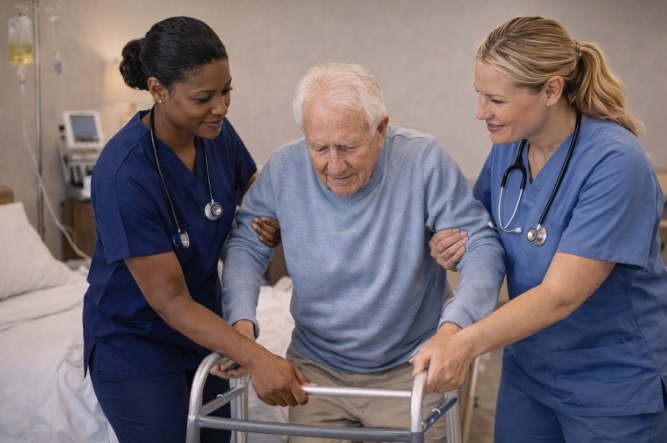 Certain indicators suggest that a patient may require complex skilled nursing rather than a lower level of support. Frequent hospitalizations, unstable vital signs, and the need for ongoing medical procedures are key factors. Additionally, patients who cannot safely manage medications or who require specialized equipment often need a structured clinical setting.
Family caregivers may also notice signs such as increased confusion, declining mobility, or difficulty maintaining basic health routines. These observations can signal that the patient’s needs have surpassed what can be managed without professional oversight.
Balancing Recovery Goals With Medical Stability
High-acuity care involves more than addressing immediate medical concerns. It also requires balancing recovery goals with the need for ongoing stability. Patients may be working toward improved mobility, independence, or symptom control while still requiring intensive monitoring.
This balance is maintained through gradual progression in care plans. Therapy intensity may increase as the patient stabilizes, while medical oversight remains in place to manage risks. Adjustments are made based on objective progress rather than fixed timelines.
The Importance Of Skilled Staffing And Clinical Experience
Delivering complex care depends heavily on the experience and training of the clinical team. Nurses must be able to interpret subtle changes in condition, administer specialized treatments, and communicate effectively with physicians and therapists.
Staffing structures also influence the quality of care. Adequate nurse-to-patient ratios and access to specialized support services contribute to safer management of high-acuity cases. In environments where clinical demands are high, experience becomes a key factor in maintaining consistent care standards.
leave A comment