
Category : Skilled Nursing

When High-Acuity Patients Need Complex Skilled Nursing In Pasadena
March 31, 2026 0 CommentWhat Defines A High-Acuity Patient In A Nursing Setting High-acuity patients are individuals whose medical conditions require close monitoring, frequent interventions, and coordinated clinical oversight. These patients often present with multiple diagnoses, unstable health patterns, or rec
Read More
Subacute Skilled Nursing Vs Long-Term Custodial Care
March 26, 2026 0 CommentCare needs often change after a hospital stay or as chronic conditions progress. Two common forms of post-acute and ongoing support are subacute skilled nursing and long-term custodial care. While both take place in supervised care environments, they serve different purposes, involve different level
Read More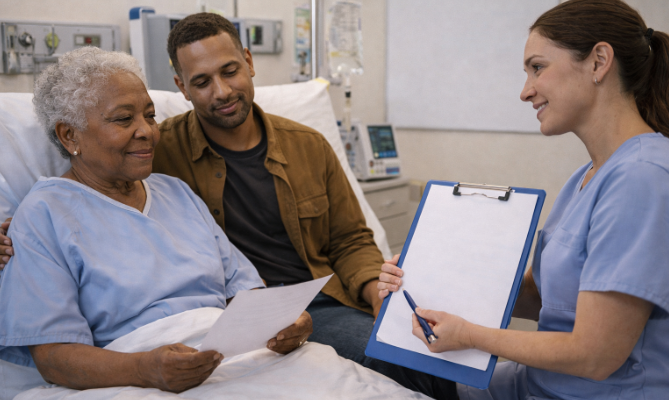
Structured Discharge Planning After Complex Skilled Nursing
March 23, 2026 0 CommentDischarge planning following a complex skilled nursing stay is a structured, multi-step process that begins well before a patient leaves the facility. It is not limited to arranging transportation or providing instructions. Instead, it involves clinical evaluation, coordination of services, and prep
Read More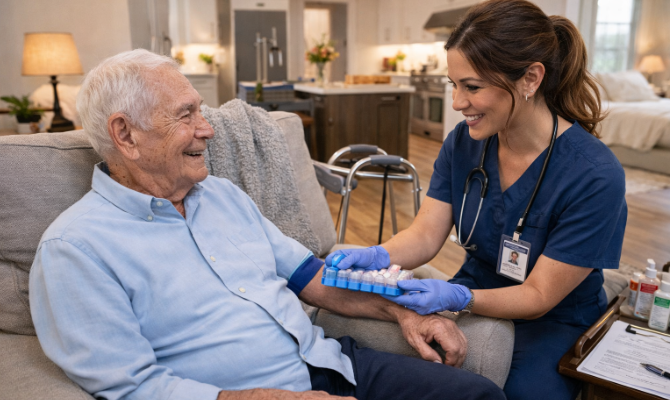
Preventing Hospital Readmissions Through Continuous Monitoring
March 18, 2026 0 CommentHospital readmissions often reflect gaps in care that occur after a patient leaves an acute setting. These gaps can involve missed symptoms, medication issues, or delayed responses to changes in condition. Even when a hospital stay successfully stabilizes a patient, recovery rarely ends at discharge
Read More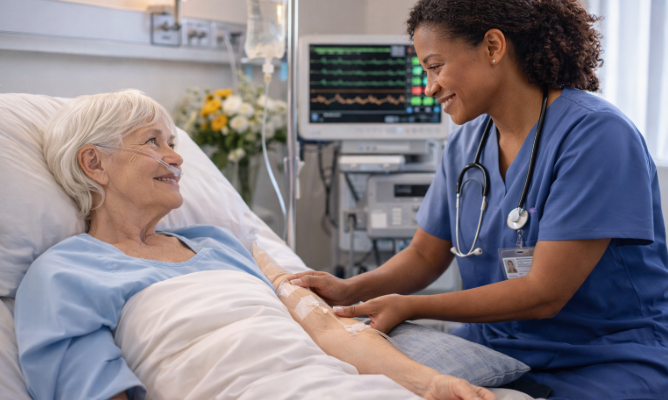
Post-ICU Skilled Nursing Near Arcadia And San Marino: Transitioning From Critical Care
March 13, 2026 0 CommentLeaving the intensive care unit often marks an important milestone in recovery, but it rarely means that medical supervision is no longer necessary. Many patients who survive critical illness continue to face complex health needs that cannot yet be managed safely at home. The period following ICU di
Read More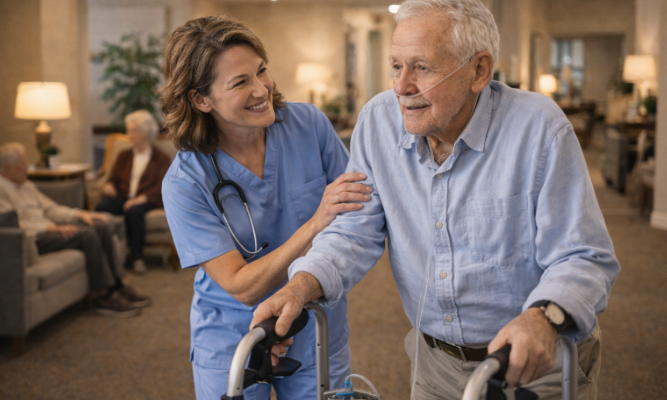
Managing Multi-System Chronic Conditions In A Skilled Setting
March 10, 2026 0 CommentChronic health conditions often affect more than one organ system at the same time. An individual living with heart disease may also have diabetes, kidney impairment, respiratory limitations, or neurological changes. When multiple conditions interact, care decisions become more complex. Symptoms can
Read More
Interdisciplinary Care Conferences In Skilled Nursing Facilities
March 5, 2026 0 CommentInterdisciplinary care conferences are structured meetings where multiple healthcare professionals review and coordinate a resident’s care plan. These conferences are a standard component of clinical practice in long-term and post-acute care settings. Their purpose is to ensure that every aspect o
Read More
How Skilled Nursing Teams Handle IV Medications And Complex Regimens
March 2, 2026 0 CommentIntravenous medications and multi-drug treatment plans are common in post-acute and long-term care settings. These regimens often involve antibiotics, cardiac medications, anticoagulants, nutrition support, or pain management therapies that require ongoing monitoring. In skilled nursing environments
Read More
Hospital Step-Down Unit Vs Skilled Nursing Recovery
February 24, 2026 0 CommentAfter an acute hospital stay, patients are often stable but not yet ready to return home. At this stage, discharge planners may recommend either a hospital step-down unit or a skilled nursing recovery setting. Although both options provide continued medical oversight, they differ in intensity of mon
Read More
High-Medical-Need Placement Vs Standard Senior Care
February 20, 2026 0 CommentChoosing between high-medical-need placement and standard senior care involves understanding the level of clinical oversight, daily support, and medical complexity a resident requires. These two care models are designed for distinctly different health profiles, even though both may serve older adult
Read More